Skip to content

Posts tagged ‘Inspirational’

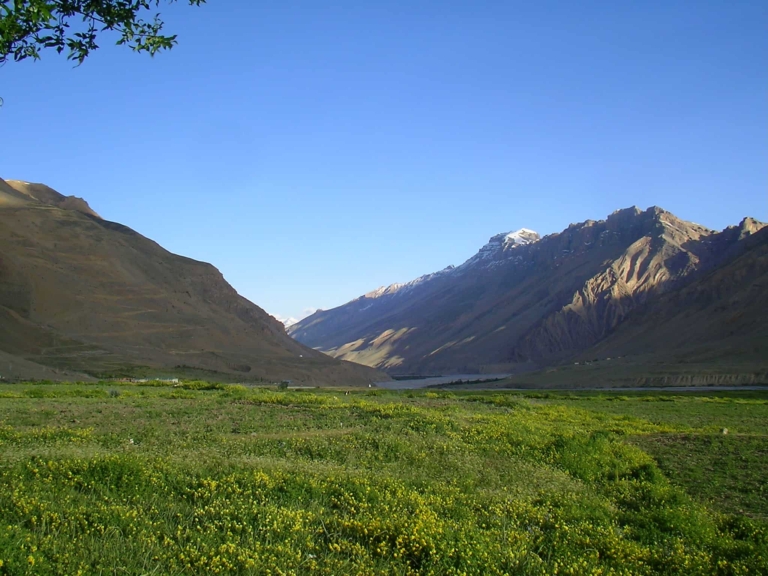
Travel Tales From Spiti: Kaza’s Garden Lady.

I sit by a Stupa on an elevation above the shore of the Spiti River, shielding myself from the sun. It’ll be a good fifteen minutes before the ball of fire sinks behind the mountain range and relieves human skins. Such penetrating sun rays would make a great premise for a sunscreen advert, I muse. Read more

Carpe diem!

This one is for all of us who have put our dreams on hold.

Remember when we were 16 and the world was our playground and nothing, absolutely nothing, was hard to envision?

Adulthood has undoubtedly put our dreams into perspective, magnifying the fine line between the good dreams and the bad, the big and the small, the realistic and the idealistic. It is trying to convince us that dreams are just that, and that life is meant to be filled with sacrifices.

It’s a lie.

Think of the last time you really, really wanted something and gave all you had to get it. Think of the thrill you felt, irrespective of whether you made it.

If the thought was short of a smile, you need to think again.

Cliched as it might sound, life comes with no warranty card. We spend so much of our time doing things we hate that we forget all about the things we love – future or no future. It’s not about being rich or famous or successful. It’s about knowing that at any given moment, there’s nothing else you’d rather be doing and nowhere else you’d rather be.

It’s about the dreams. Let them live with you, within you.

’cause time flies

It’s been exactly a year since I unofficially graduated from college and lost myself in the insanity of adulthood. I have loved the freedom since, the rush of responsibility, the financial independence, the stamp of a degree, the corporate chaos. And also hated it.

Life has changed in many ways, and yet, in some fundamental sense, I am still the restless, fickle mind of a young student exploring the ways of the world, looking for adventure in the least likely of places, and forever moving by elimination. I have however, in this year, found a master key to survival – living a day at a time. Of all things that work, this one works wonders. It’s amazing what a day can be, with no future to look into and no past to brood over.

I am not aspiring to be a life coach just yet, so I’ll leave you with these lines from Porcupine Tree,

But after a while, You realize time flies, And the best thing that you can do
Is take whatever comes to you, ‘Cause time flies…

What will be, will be

We walk through life not knowing what would’ve been if we had taken the other path or made the other choice. And we find comfort in dismissing it as destiny.

Through time, destiny has become inseparable from religion, spiritualism and in the bigger picture, life. Objectively though, it seems to be yet another measure to give order to all the chaos in the world. It helps, the way the it helps to have hope and faith, to believe in something bigger than ourselves and our circumstances, to even surrender in the name of a bigger plan for our life. Chances are that those are the very elements that make our ‘destiny’.

Destiny is often intertwined with fate, and somewhere along the way, the two meet astrology. Astrologers claim to be able to predict our destiny, and sub-consciously, we are inclined to believe them. In fact, sunsigns, zodiacs and horoscopes have exerted more than their fair share of influence on people by becoming self-fulfilling prophecies.

I can’t say if it’s a factor of age or experience, but at some point, surrendering to destiny or fate or whatever it is we want to call it, seems like the right thing to do. As though something will hold our hands and make us walk the ‘right’ path. As though the wind will knock at the ‘right’ door on our behalf. As though we’ll open our eyes one morning, and there it will be, the ‘right’ life, fixed and ready to be lived.

Let’s get real. Let’s write our own stories.

Advertising bites, 2009

Creativity can never be drained out of advertising. I don’t know if sales will increase post these ads, but smiles definitely will.

An incredible Incredible India TV commercial by Nirvana films.

A wonderfully executed TV commercial by TATA Communications for its foreign markets (hence not featured on Indian TV).

A glocalized Intel ad for an Indian audience.

An Amul billboard I spotted in Bombay, targeting the 90% reservation proposal for SSC students by the Maharashra government. Never doubt the power of the freedom of speech in a democracy!

Amul billboard ad

What are your favorites this year?

Under the night sky

She walks the lone road,

Silence stinging her senses

Like a cold wind would sting

Her bare skin,

But the night is still

And dark, and the sky is dark,

Embracing the dainty arch

Of the new born moon,

As though it were created to protect

The moon alone, and nothing below,

And no stars shone

Upon the silence of the night. 


She walks past a house masked

By dull peeling white, the smell

Of rust, and autumn in sight

In a garden, brown and bare.


She walks through the night

Till she reaches the end

Of her road, the end of all life,

And peers through the sky above

At the morning light, at the first rays

Of the rising sun.

A new horizon?

sany01791 

The Aasha Build: Gift hope, build a home

Slumdog Millionaire has put the slums of India on the world map, albiet in an artistic way. Despite the obvious, it’s still hard to believe that some people don’t have a concrete roof over their heads, that they live in make-shift shacks even in this age and time. Apparently, India homes 17% of all slum-dwellers in the world, a figure which translates to about 170 million people! The odds are just slightly tilted in our favor. 

If you have ever witnessed the poverty on India’s streets (in person or through CNN or BBC), I am sure you have wondered, even for a moment, if there was a way you could help. This is your chance.

A few of us have started an initiative with Habitat for Humanity to build houses in a slum area in Devanahalli, on the outskirts of Bangalore, India. The 2 weeks we spend on site will involve an intensive 10 day build, with an aim of constructing 8 double-storeyed houses, sheltering 16 families or approximately 96 individuals. A house might sound trivial, but to some child and some parent, it will be their first real home.

Aasha is the Hindi word for hope, and The Aasha Build is our chance to make a difference in our world. 

The Aasha Build

Besides the issues of homelessness and poverty, the village of Devanahalli and its neighbours are also breeding grounds for microfinance and self-help groups. Without the technicalities of these titles and the formal operations they entail, these villages have sustained themselves for years by self-help practices. Unlike urban India, families in these villages are mostly headed by women, who support each other as ‘human collateral’ for microfinance institutions and undertake entrepreneurial ventures. 

Although we are recruiting only 20 volunteers to go for the build, we are trying to engage the entire online community to create awareness about homelessness, microfinance and self-help groups, and to garner support. If you would like to contribute to our initiative, here is how you can help.

Support our cause by displaying The Aasha Build badge on your blog or website. Communicate your support to the Devanahalli community by leaving them a message here.

“How wonderful that no one need wait a single moment to improve the world.”  - Anne Frank

Climbing Mount Kinabalu

Climbing the 20th highest peak in the world is probably my greatest achievement thus far! It was exciting, daunting, exhilarating and surreal, in that order.

We started our climb via the Timpohon Gate, located 90 km from Kinabalu National Park, Borneo (East Malaysia). The first day’s target was to climb 6 km horizontally and 1300 m vertically. The initial stretch was relatively easy, alternating between clearings and small steps, amid tall trees and dense vegetation. The second half was slightly more taxing, with steeply inclined rocks and steps, where trees were gradually replaced by shrubs and bushes. The trick was to save as much energy as possible by finding an alternative way to climb the steps through rubble and using small rocks as stepping stones. The view became more scenic with height and we were shrouded in mist for certain stretches. I would typically describe it as breath-taking, but I must reserve the term for the summit.

Misty mount

Misty mount


Our guide, Yeta, climbing the rocky path

Our guide, Yeta, climbing the rocky path


A glimpse

Midway beauty

It is mandatory for all climbers to spend the night at Laban Rata or one of its subsidiary guest houses before resuming the climb the next morning. Even those scanty hours of rest were a blessing to sore muscles. At 2 am the next morning, the entire guest house (about 20-25 climbers) was brimming with activity. Over the course of the night, the weather had become chilly, so much that thick woolen gloves offered just enough protection from the cold. Wrapped in all the clothes we had carried, my brother and I set out with our guide, determined to conquer the peak.

The dark of the night was lit by a trail of several small torch-lights making their up, up, up. If the first 6 km were challenging, the next 3 were almost terrifying! With our torches clutched between our teeth, we grabbed climbing ropes from stretch to stretch, trying to get a grip on the bare rock of the mountain. I haven’t experienced such thrill, such adrenalin rush in all my twenty (one) years. The dark, though, made the terrain less daunting, a realization that would dawn on me later.

By about 6 am and after baffling with the wind and the rain for a good half hour, we conquered the last stretch with huge rocks and no ropes. That was it! Low Peak, 4095 m, the 4th highest in SE Asia, the 20th highest in the world, the only that I might ever conquer, spectacular. We were above the clouds, almost touching the sky, and watching the most breathtaking sunrise in all of history. The round of the sun gradually emerged, it’s rays distinctively penetrating the air, a salute to all creation, a promise that nothing is significant enough, an assurance that THIS is life. My words really can’t do justice to that feeling of being at the top of the world, literally. It’s where I began my 21st year of life.

Low's peak

Low’s peak

dscn00931The sunrise

The sunrise
Painting blue

Painting blue


The rope-clutching climb

The rope-clutching climb


The last stretch of the climb

The last stretch of the climb


mountain blues

mountain blues

The climb down wasn’t my favorite part at all. The 900 m we had climbed since the morning of the descent almost put my entire life into perspective. In the light of the sun, I could now see clearly the vertical terrain we had climbed, and that now lay for us to climb down. One slip was all it would’ve taken, to unite with creation again, somewhere up there. It was a numbing feeling. In restrospect, I don’t know how I made it back. Perhaps a little determination, lots of good luck, and definitely a helping hand from my guide Yeta. Yeta came from a village at the foot of the mountain and has been a guide for 12 years now. She climbs the mountain, on an average, twice a week, so by rough calculations, she’s done the trail 500 times! Phew.

Misty way back

Misty way back

Light breakfast, wobbling feet and 6 hours later, we made it back to our starting point, proud and tired. The adventure has housed itself in my head. Life can be short, I know, but it can also be the single most intoxicating experience.

Goodbyes

Goodbyes

View my Flickr Photostream. 

Vision for all

If you wear eyeglasses, I’m sure you can remember what it felt like the first time you wore them. Personally, I was in denial for 2 years before I got my first pair. My bespectacled self realized that my whole world had been a blur. Suddenly, everything was bright and all those blotches had defined shapes. I could see clearly again, thanks to Salvino D’Armate, peace be upon him.

Unfortunately, millions the world over, and nearly 15 million people in India can never experience their first time. I shall resist brooding over how this affects their quality of life and how unfair the financial inequality in our country is. I will however mention that the aftermath of unaided poor vision is often blindness. 

specs1

A while ago, a friend told me how some IIT students had found this problem an ingenious solution. Today, I stumbled upon a similar initiative by Lions Club International. Apparently it has been in place for over 80 years! I’m still blown away by the idea, and to prevent further anticipation, here goes:

One can barely estimate the number of spectacle lenses that must go to waste each time a person’s eye-power changes, making it necessary to replace old, used pairs of spectacles. Throughout the year, Lions Clubs collect such obsolete pairs of spectacles, donated by owners who can no longer use them. These pairs are cleaned and classified by the power of their lenses. Volunteers then go to rural areas in developing countries and each pair of eyeglasses finds a new pair of eyes as soon as a suitable match is found. Really, a bright idea!

If you are still hoarding your old pair of eyeglasses, donate them now and let someone see the world again!

Game theory lessons in life

In yesterday’s class of game theory, I learnt one of life’s most important lessons, proven mathematically. It is a generalization of the Shooting Game to life and business, and I’ll try to keep it as non-technical as possible. 

If you’re not already familiar with the term, game theory is a subset of economics that assesses the behavior of people in situations where the result (outcome) of their actions (strategies) is influenced by the actions of other people (players). The most widely known example of a game is the Prisoner’s Dilemma.

The Shooting Game is a zero sum game, implying that co-ordination is never possible. When one player wins, the other always loses. The game takes place as follows:

Each player has a pistol loaded with only one bullet. They stand 10 steps apart and walk towards each other, at the same pace, one step at a time. After each step, they can choose to fire their one bullet at the other player. The probability of an accurate shot increases with each step, as the players get closer to the other player. After k steps, it is k/5. So the probability of hitting increases from 0.2 to 1 over 5 steps.

The payoffs: 1 if you kill the other guy and you stay alive; -1 if you get killed and the other guy stays alive. 0 if both are killed simultaneously.”

The shooting game is solved backward, from step 5, evaluating the dominant strategies of the players at each step, using the payoff matrix at each step. Without getting into a detailed game theory solution, here’s what the players must do, given the above. (On some level, it’s kind of intuitive too.)

Equilibrium outcome: Actual play of the game will result in both players shooting at step 3.

The full equilibrium strategy for either player: Do not shoot on steps 1 and 2, no matter what.  At any step, if the other player has shot and missed while you have yet to shoot, then wait until step 5 to shoot (complete accuracy). If you arrive at step 3 (or later) and the other player has not yet shot, then shoot at once.”

The idea is, you must be as accurate as possible, yet still have the chance to take a shot (not die). The game can be generalized to business competition, like the launch of a new product.

The more realistic version though, is one in which the skill sets of the 2 players differ. Let’s say the probability of an accurate shot varies with each player. For one, it is k/5, and for the other, square root of k/5. The latter being the weaker player, must always shoot first, reason being, it’s his best option and he has nothing to lose.

Graphically,

When skills differ among players, notice that the origin is where the gap in skills is the narrowest. Therefore, it makes most sense for the weaker player to shoot right at the start of the game.

The same can be applied to weaker players in real life – weaker in terms of assets, with less at stake in terms of reputation, responsibilities, opportunity costs and the worst case scenarios. For instance if you are right at the bottom, at work or in a race, your best strategy is to take risks and try to change things drastically. In the worst case, you’ll fail and stay at the bottom, losing nothing. In the best case, you’ll rise! If, on the other hand, you’re already leading or are very near the top, it makes sense for you to continue with things that have proven to work and avoid risks, because if you try and fail, you will slip all the way to the bottom. Best case, you’ll remain where you already are!

The game was in execution in the last season of the Amazing Race too. The challenge was to find a clue on one of 7 islands. The second team which was right behind the first, followed the first. It was a logical decision, they had everything to lose, being almost at the top. One of the other teams though, consisting of a couple of soccer moms, was far behind. At the bottom already, with not much at stake, they decided to take the off-beat path to an island different from the one taken by the first too. Best case, they’d win. Worst case, they’d stay at the same position. Game theory at its best. And guess what, they won indeed, and managed to stick around longer in the amazing race!

Lesson for life: Take risks now, challenge conventions now, experiment now. The older you become, the more responsibilities you take on, the more you have at stake to risk. If you want to do something different, if you want to try something new, the time is now. Go for it!

Follow

Get every new post delivered to your Inbox.

Join 7,882 other followers